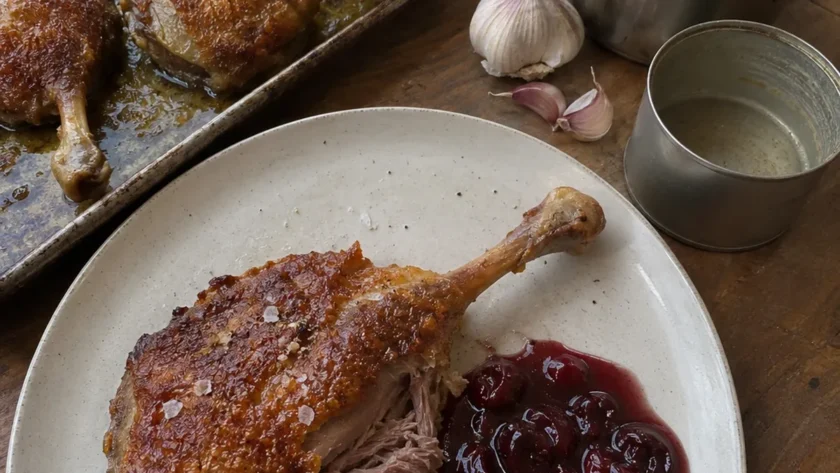

Real Delia Smith duck confit starts with 8 duck legs, rubbed with salt and left in the fridge for a day. They cook slowly in goose fat and stay in it, so on the night they only need 25 minutes in a hot oven to crisp. It feeds 8 with a port and cherry sauce, and the cooking takes 3 hours and 10 minutes.
The recipe on her website comes from Delia’s Christmas Easy magazine of 2003, which explains that confit is the French word for preserve. It was meant for New Year’s Eve, because everything is done well in advance. The confit is best kept for at least four weeks, though it is still brilliant with less time.
For a whole duck roasted in one go, her duck with cherry sauce is the classic roast instead. This page is the slow, make-ahead way with the legs.
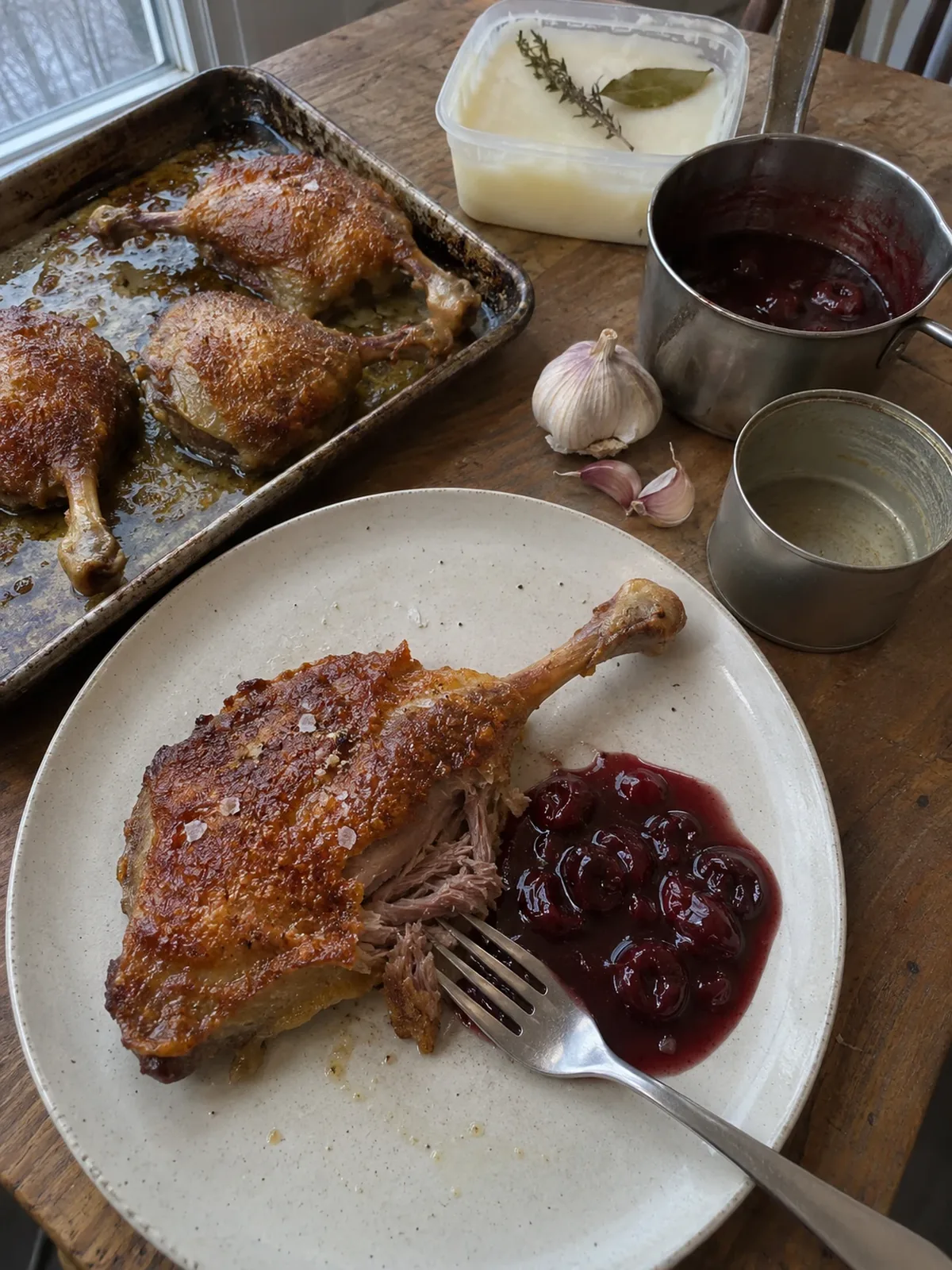
Delia Confit Duck
Her Confit of Duck with Port and Sour Cherry Sauce, a make-ahead dish of salted, slow-cooked duck legs for 8.
8
servings15
minutes2
hours55
minutes600
kcalIngredients
- For the salting:
8 large duck legs
175g Maldon sea salt
- For the cooking and preserving:
3 x 340g tins goose fat
8 cloves garlic, bruised (no need to peel)
20 black peppercorns, coarsely crushed
20g fresh thyme sprigs
4 bay leaves, each cut into 2 pieces
- For the sauce:
400ml port
110g dried cherries
50g golden granulated sugar
2 tablespoons good-quality red wine vinegar
Directions
- Salt: Rub the salt into the duck legs and lay them in one layer in a plastic container about 25.5cm square and 7.5cm deep. Sprinkle over any salt left, cover and refrigerate for 24 hours.
- Wash: Preheat the oven to 140°C, gas mark 1, and gently heat the goose fat in a 3.5-litre lidded flameproof casserole. Wash the legs very well under running water so the confit is not too salty. Then soak them in a bowl of cold water, drain and repeat.
- Confit: Put the wet legs into the fat with the garlic, peppercorns, thyme and bay leaves. Bring it up to simmering point, cover and cook in the oven for 2½ hours, until a small skewer meets little resistance.
- Store: Cool for about an hour, then lift the legs back into the washed and dried container and strain the cooled fat over them. Once completely cold, cover and keep them in the fridge.
- Sauce: Put the port, dried cherries, sugar and vinegar in a medium saucepan and bring up to a gentle simmer. Stir well, then let it barely simmer without a lid for 40 to 45 minutes, until only about 4 tablespoons of liquid are left.
- Crisp: Take the duck out of the fridge about an hour before. Heat the oven to 220°C, gas mark 7, with a baking tray inside. Roast the legs on the hot tray on a high shelf for 25 minutes.
- Serve: Serve the crisp legs with the sauce.
Notes
- Start a day ahead, as the legs need their 24 hours in salt before they are cooked.
FAQs
Where do I buy duck legs?
Ask a butcher, or look for packs of duck legs in the supermarket. The Complete Cookery Course (1992, page 195) notes that duck portions on the bone can now be bought, and that they roast until crisp. For this recipe, choose large legs, as each one is a full serving.
How do I know the legs are done?
A small skewer should meet very little resistance when you push it into a leg, which is the test her website uses. The 25 minutes at 220°C on the night then heats the legs through and crisps the skin. Check they are piping hot in the middle before serving, which is our own safety tip.
Can I turn it into a starter?
Yes, though her duck starter is a different recipe, the Rillettes of Duck in her Winter Collection (1995, page 42), for 6. It uses a whole duck cut into quarters rather than legs in goose fat.
The quarters are roasted first, then simmered very gently for 2 hours in white wine with thyme, mace, garlic, peppercorns and juniper. Finally the meat is shredded with two forks and pressed into a terrine with the juices, and it keeps for about three days.
Can I keep the goose fat?
Yes, so do not throw it away once the legs are eaten. Strain it into a clean jar and keep it in the fridge, which is our own tip.
The Complete Cookery Course uses the fat from a roast duck for roasting or sautéing potatoes. The 1995 rillettes recipe says the same about duck fat, calling it excellent for cooking.