
Here’s how to make Delia Smith quince jelly with her own overnight-drip jelly method, turning 1.6kg of chopped quinces into a clear, rosy jelly. You simmer the fruit with a lemon’s juice, leave it to drip overnight, then boil the juice hard with sugar for about 10 minutes. Spread over two days, it needs about 2 hours of cooking and at least 8 hours of dripping, for three or four jars.
Quince jelly is not among her printed recipes, and her website says so when readers ask, warning that one recipe found online is not hers. So this page follows her Spiced Cranberry and Claret Jelly from How to Cook Book Three (2001), page 104. That recipe gives the overnight drip, the sugar measured against the juice and the wrinkle test.
Quinces grow in her own garden, too. Her Kitchen Garden book (2004) describes a small orchard planted with her favourite Bramleys, pears and quinces. Cooked long and slowly, the pale fruit turns the juice a soft rosy amber, and its natural pectin gives a firm set.
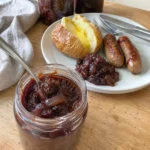
Spread it on hot toast, or serve it with cheese and cold meats. The overnight drip here is the same one behind our crab apple jelly recipe, so the two jellies make a good autumn pair.
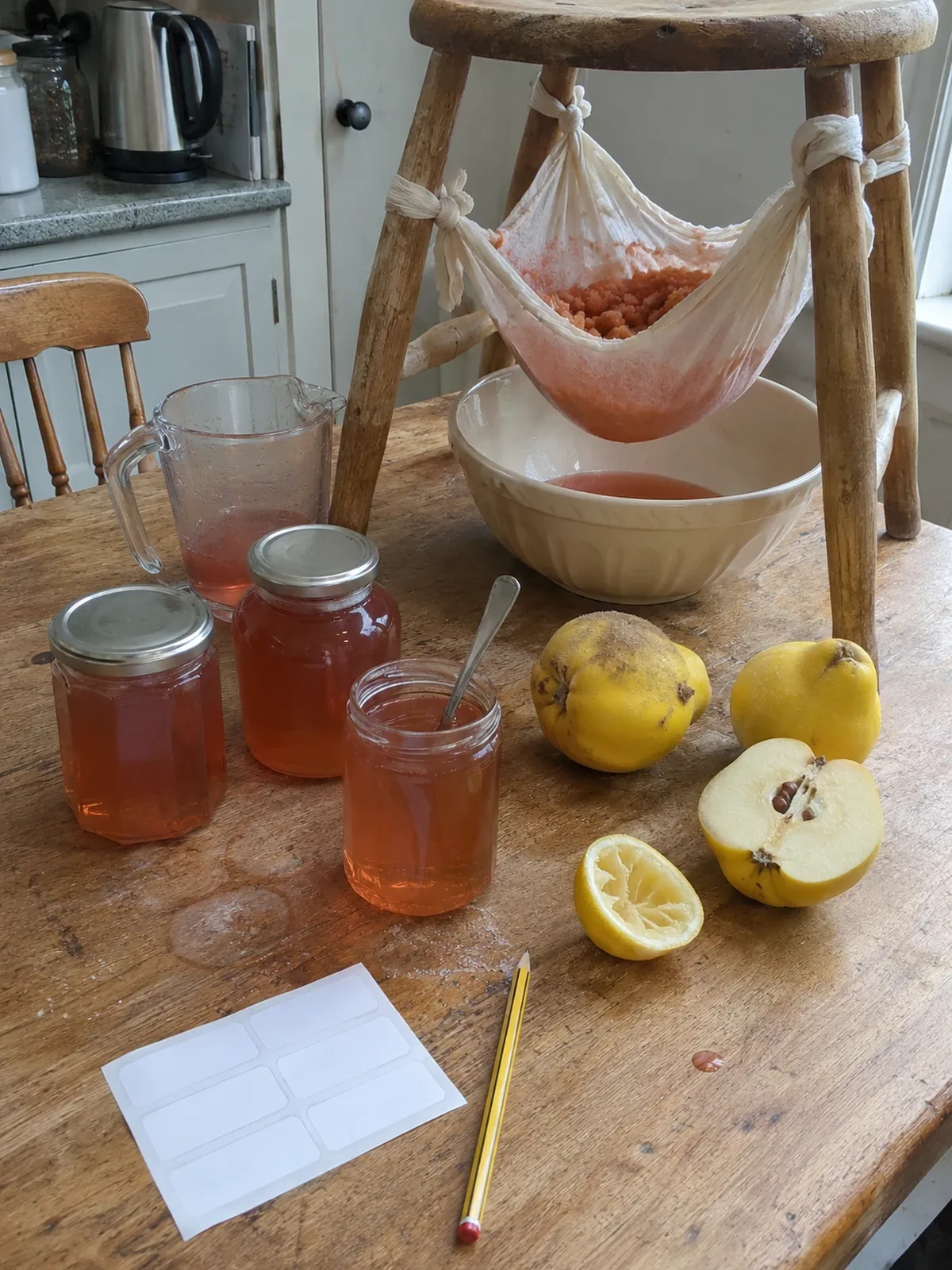
Delia Quince Jelly
Built from her overnight-drip jelly method: chopped quinces simmered soft with lemon, strained overnight and boiled hard with sugar to a clear, rosy set.
3 to 4 jars
servings15
minutes1
hour20
minutes40
kcalIngredients
- For the jelly:
1.6kg quinces
about 2 litres cold water, enough to cover
juice of 1 lemon
granulated sugar, 450g for every 570ml of juice
a large nylon sieve lined with muslin, or a jelly bag
3 or 4 x 450g jars with lids, and waxed discs
4 small plates, for the set test
Directions
- Prepare: Rub the soft grey down off the quinces with a cloth, rinse them and cut out any bruised parts. Chop them roughly, keeping the skins, cores and pips.
- Simmer: Put the fruit in your largest pan with the lemon juice and enough water to cover it. Simmer gently for about 1 hour, until very soft and mushy, adding a little more water if the pulp gets thick.
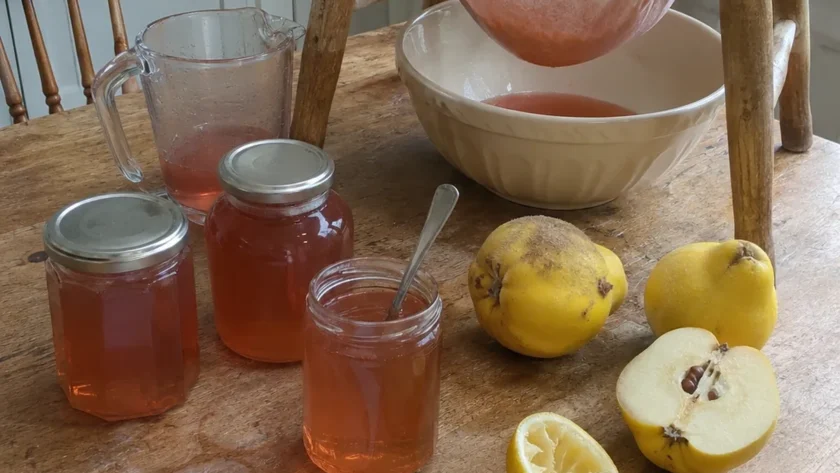
- Drip: Tip everything into the lined sieve or jelly bag over a large bowl. Leave it to drip for at least 8 hours, or overnight, and do not press it, or the jelly will turn cloudy.
- Plates: The next day, put 4 small plates in the freezer. Wash the jars and heat them in a medium oven, 180°C, gas mark 4, for 5 minutes.
- Sugar: Measure the juice and weigh out 450g of sugar for every 570ml. Pour the juice into the rinsed pan, add the sugar and stir over a gentle heat until it has completely dissolved.
- Boil: Turn the heat right up and boil the jelly at a fast rolling boil for about 10 minutes, using a timer.
- Test: Take the pan off the heat and put a teaspoon of jelly on a cold plate. Put it back in the fridge for a few seconds, then push it with your finger, and if the surface wrinkles, it has set. If not, boil again and test every 5 minutes.
- Pot: Let the jelly settle for 15 minutes, then fill the hot jars as full as you can. Put on the waxed discs straight away, seal tightly and label when cold.
Notes
- The water, lemon juice and simmering time are our own amounts for quinces, and the sugar matches our crab apple jelly.
- A jelly's yield is never exact, her own note says, because it depends on the fruit and how long it drips.
- The calories are for a tablespoon (15g) of jelly, not a whole jar.
FAQs
Do I need to peel and core the quinces?
No, chop them whole, because the skins and cores hold much of the pectin that sets the jelly. Just rub off the soft grey down first and cut out any bruises. Slightly under-ripe fruit sets best, as her jam rules explain, since it holds more pectin and acid.
Why add lemon juice?
Lemon juice adds acid, and her jam rules use it for fruit with less acid of its own. With quinces it also sharpens the flavour and helps give a firm, clear set. One lemon for 1.6kg of fruit is our own amount.
Why is my quince jelly dripping so slowly?
A slow drip usually means the cooked pulp is not sloppy enough, because there was too little water, her website explains. Never add water to the strained juice, as that will not work. Instead, put the pulp back in the pan with more water, simmer it again and strain it through a clean jelly bag.
Why has it turned pink?
Quinces turn from pale gold to rosy pink or amber as they cook, which is normal. The longer the fruit simmers, the deeper the colour, so a 1-hour simmer gives a soft rosy jelly. The colour does not change the set or the taste.
Why won’t it set?
Quinces are rich in pectin, so a soft jelly usually needs a harder, longer boil. Keep testing at 5-minute intervals, as her jelly method does. If the cold jars are still runny, her 1992 jam rules boil the batch again with the juice of a small lemon.
What can I do with the quince pulp?
Turn it into membrillo, the firm quince paste, which her website also suggests. Push the pulp through a sieve and weigh it, which is our own method. Then cook it slowly with an equal weight of sugar until very thick.
In How to Cook Book Two (1999), she notes that Spain serves thin slices of Manchego with sweet quince paste. That same 2001 book also puts membrillo in an apple sorbet.