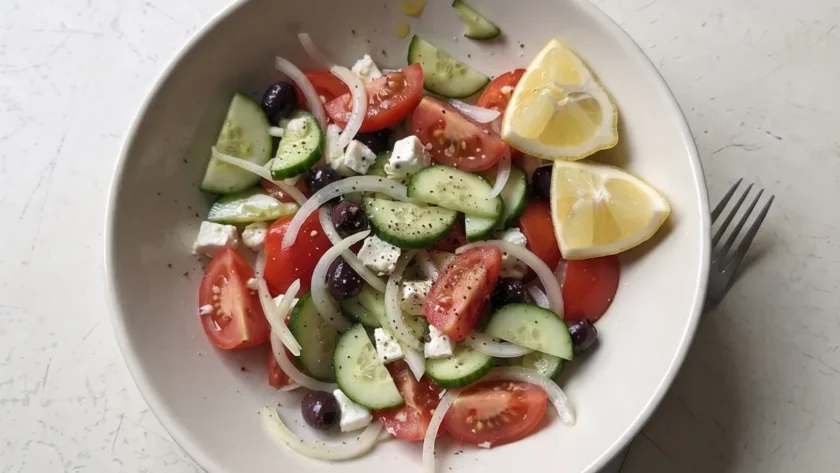

Delia Smith’s Greek salad is about as simple as a salad gets: small pieces of feta mixed with ripe tomatoes cut into eighths, thin half-slices of cucumber, half-rings of onion and small black olives, seasoned, then dressed with olive oil just before serving and finished with lemon quarters. It makes lunch for 2 or 3 in about 15 minutes.
It sits in the cheese chapter of her Complete Cookery Course rather than among the salads, and it hasn’t changed since the 1983 edition, except that the 1992 one asks for Greek olive oil if you can get it. There’s no vinegar, no green pepper and no dried oregano, just oil, salt, pepper and a squeeze of lemon at the table.
The feta goes in as small pieces mixed right through the vegetables, not as a slab on top, so you get some in every forkful. That means salty, creamy cheese against juicy tomato, cool cucumber and the sharp bite of raw onion.
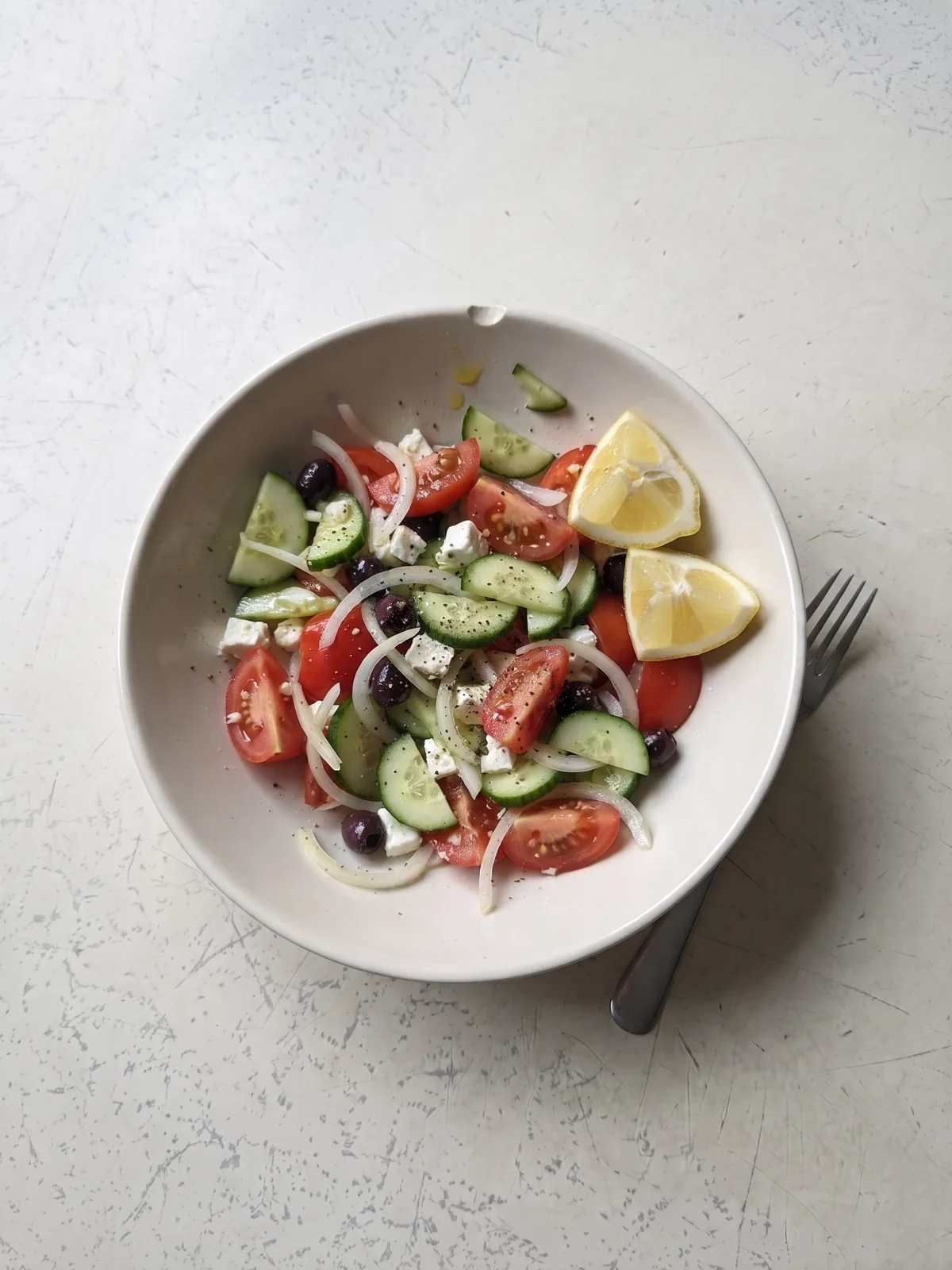
Delia Smith’s Greek Salad
Course: SaladsCuisine: GreekDifficulty: Easy3
servings15
minutes400
kcalFrom Delia’s Complete Cookery Course (1992), pages 425 to 426, with no vinegar in the dressing at all. The ingredients are feta, tomatoes, cucumber, onion, black olives, olive oil and lemon, enough for 2 or 3 people as a light lunch.
Ingredients
- For the salad:
175g (6oz) feta cheese, cut into small pieces
6 ripe, firm tomatoes
½ small young cucumber, or 1 whole ridge cucumber
1 medium onion
50g (2oz) small, firm black olives
4 tablespoons olive oil, Greek if possible
salt and freshly ground black pepper
1 small lemon, quartered, to serve
Directions
- Tomatoes: Cut each tomato into quarters, then cut each quarter in half again to give eighths.
- Cucumber: Slice the cucumber 3mm (⅛in) thick, then cut each slice in half.
- Onion: Slice the onion into thin rings and cut the rings in half.
- Mix: Put the feta, tomatoes, cucumber, onion and olives in a salad bowl, mix them together and season with salt and pepper.
- Dress: Just before serving, pour the olive oil all over the salad.
- Serve: Put the lemon quarters on the side, so everyone can squeeze some over their own portion.
Notes
- Feta is salty, so add salt sparingly until you've tasted a piece of the cheese.
- A ridge cucumber is the short, knobbly outdoor kind, and half a small ordinary cucumber does the same job.
- Use olives with their stones in, if you can find them, as they usually have more flavour, which is my own preference.
FAQs
What can I use instead of feta?
White Stilton, which is the alternative Delia gives herself. Her headnote says the salad should really have crumbled Greek feta, but white Stilton works in its place.
When she wrote the Complete Cookery Course, Greek cheeses were mostly found only in Greek or Cypriot shops, and she still rated feta highly in a salad as long as it was very fresh. Today feta is in every supermarket, so check the date and buy the freshest block you can.
Why is there no vinegar in the dressing?
Because this salad is better with lemon. In her chapter on salad dressings, Delia remembers a lovely salad she ate in Greece of olives, tomatoes, cucumber and feta, with lemon juice squeezed straight over it and a drizzle of olive oil.
She found that combination just right for this salad, although for most others she prefers wine vinegar. So the lemon quarters aren’t a garnish to leave on the plate: squeeze them over.
Which olive oil should I use?
A Greek one if you can, which is what the 1992 edition of the recipe asks for. Delia has had very good Greek olive oil made from olives grown around Kalamata, though her own everyday favourites are Italian and Provençal.
Since the oil is the whole dressing here, it’s worth using a fruity extra virgin one. Pour it on just before you serve, so the tomatoes don’t sit in it and go soft.
Can I make it ahead?
Yes, by an hour or so, which is my own timing. The tomatoes, cucumber, onion, olives and feta can be mixed in the bowl, covered and kept cool.
Season the salad and pour over the oil only when you’re ready to eat, as Delia does. The salt draws juice out of the tomatoes and cucumber, so it’s best not to leave them dressed for long.
What does Delia serve with it?
Lamb, most of all. Her How to Cheat at Cooking (2008) suggests a Greek salad with her Greek lamb baked with lemon and garlic, and with her quick moussaka alongside some rice.
The version in that book is a little looser, with cucumber chunks, quartered tomatoes and red onion slices tossed in olive oil, lemon and garlic. On its own, the Complete Cookery Course version is meant as a lunch dish, and I’d add some warm pitta, which is my own suggestion.