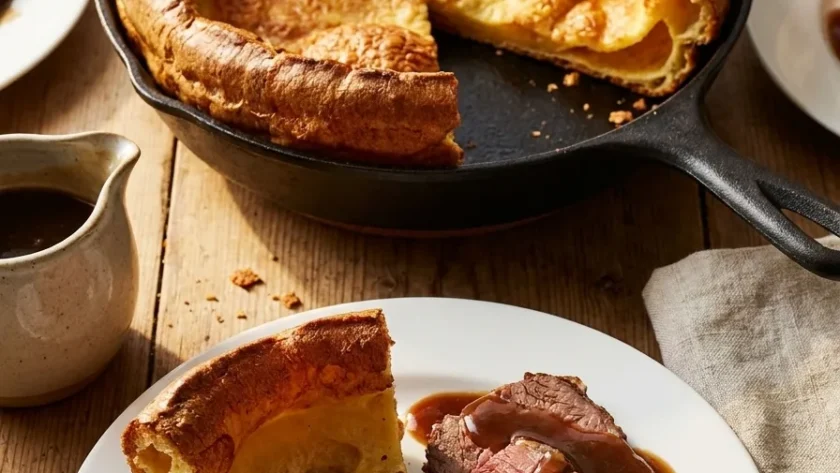
 Anne Morgan
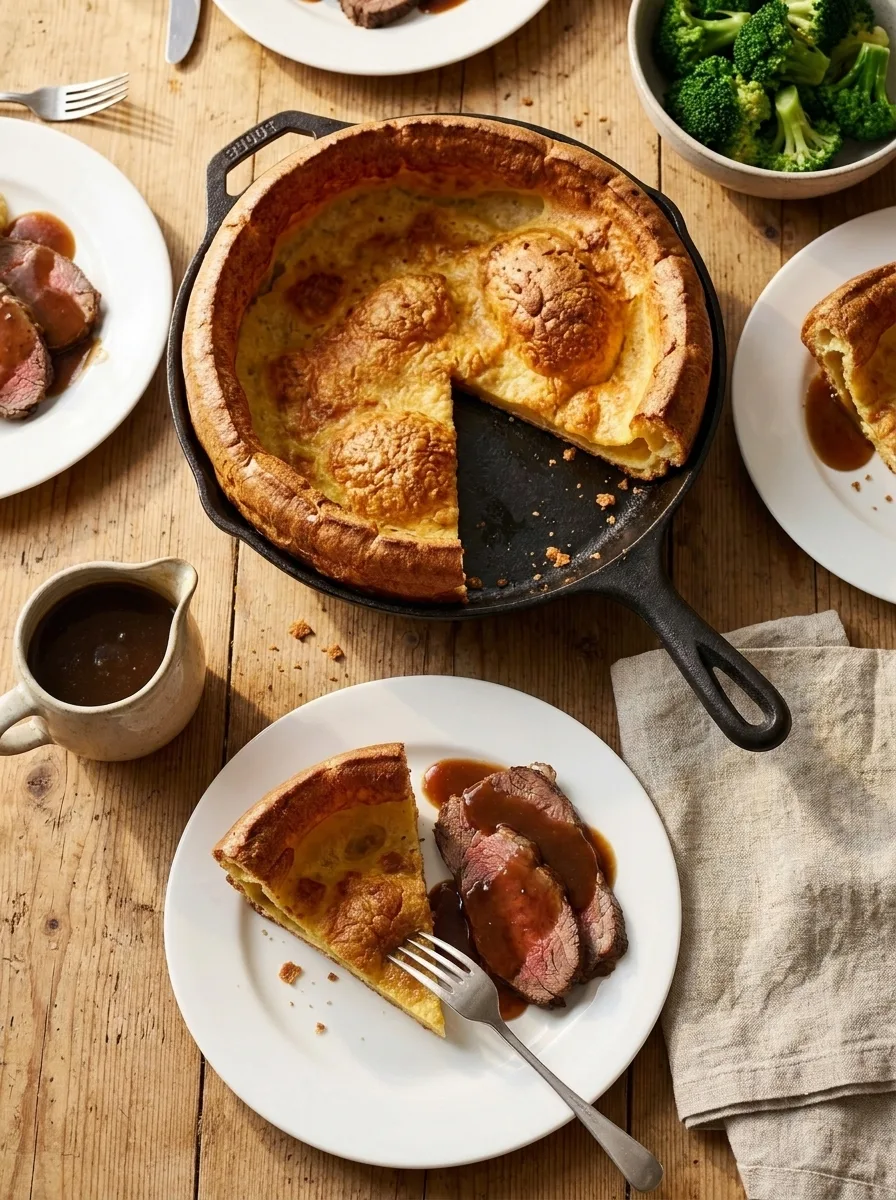
 Delia Smith’s Yorkshire puddings for 4 use one egg, 75g (3 oz) plain flour (all-purpose flour), a mix of semi-skimmed milk and water, and beef dripping in a frying pan at 220°C (Gas Mark 7) for 25 to 30 minutes. The milk and water split is what makes these crispy instead of soft, and it is the detail most other recipes leave out.
I used self-raising flour for years and could not work out why my Yorkshire puddings came out flat and spongy. Then I read Delia’s three rules in the Complete Illustrated Cookery Course: very hot oven, flameproof metal tin, and plain flour only.
I switched to plain flour and they rose properly for the first time.
More Yorkshire Pudding Recipes:
- All Yorkshire Pudding Recipes
- Yorkshire Puddings for 6
- Yorkshire Puddings for 8
- Yorkshire Puddings for 12
Why Milk and Water, Not Just Milk?
Delia uses 75ml semi-skimmed milk and 55ml water. The water turns to steam faster than milk in the hot oven, which is what forces the batter upwards.
All milk makes a richer batter but it does not rise as dramatically and the shell stays softer.
Lindsey on the Delia Online team confirmed this when a reader asked why their puddings were not crispy. Semi-skimmed rather than whole milk helps too, because there is less fat in the batter competing with the dripping.
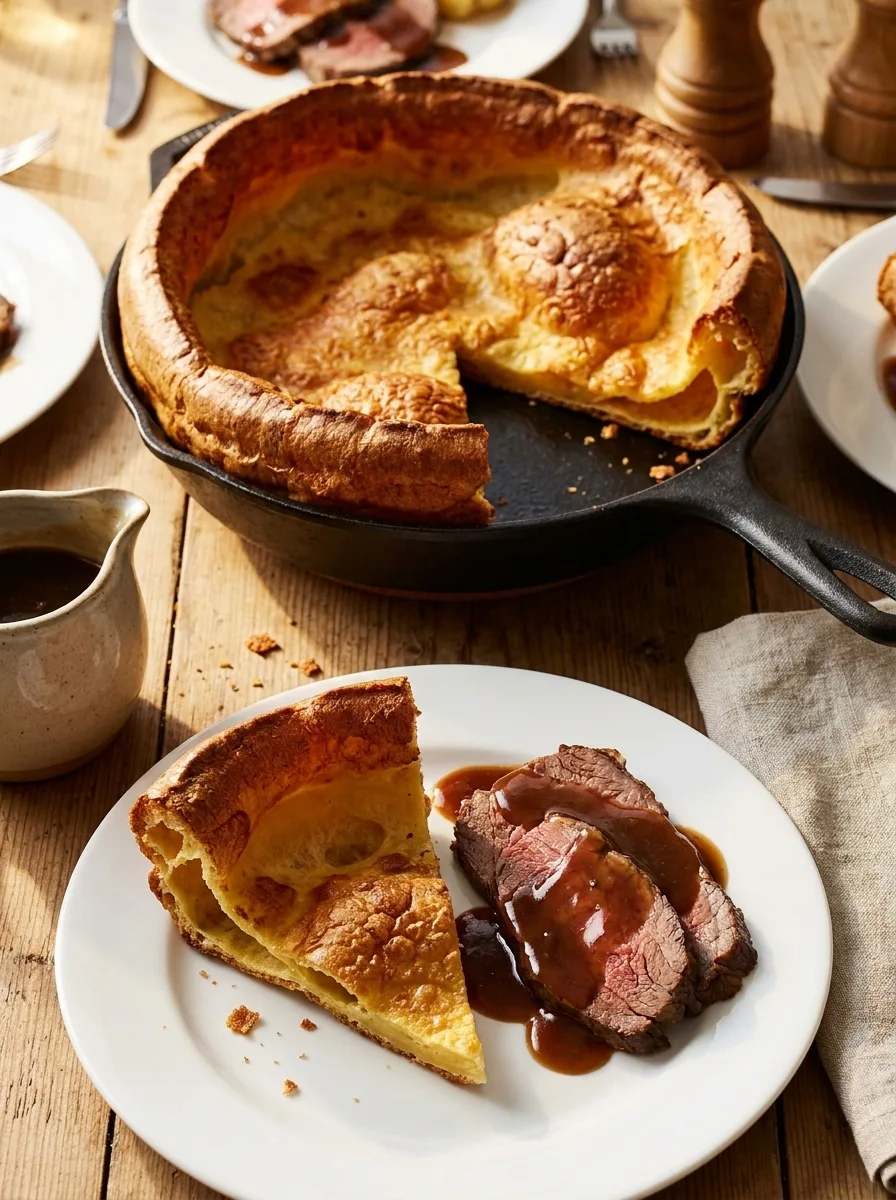
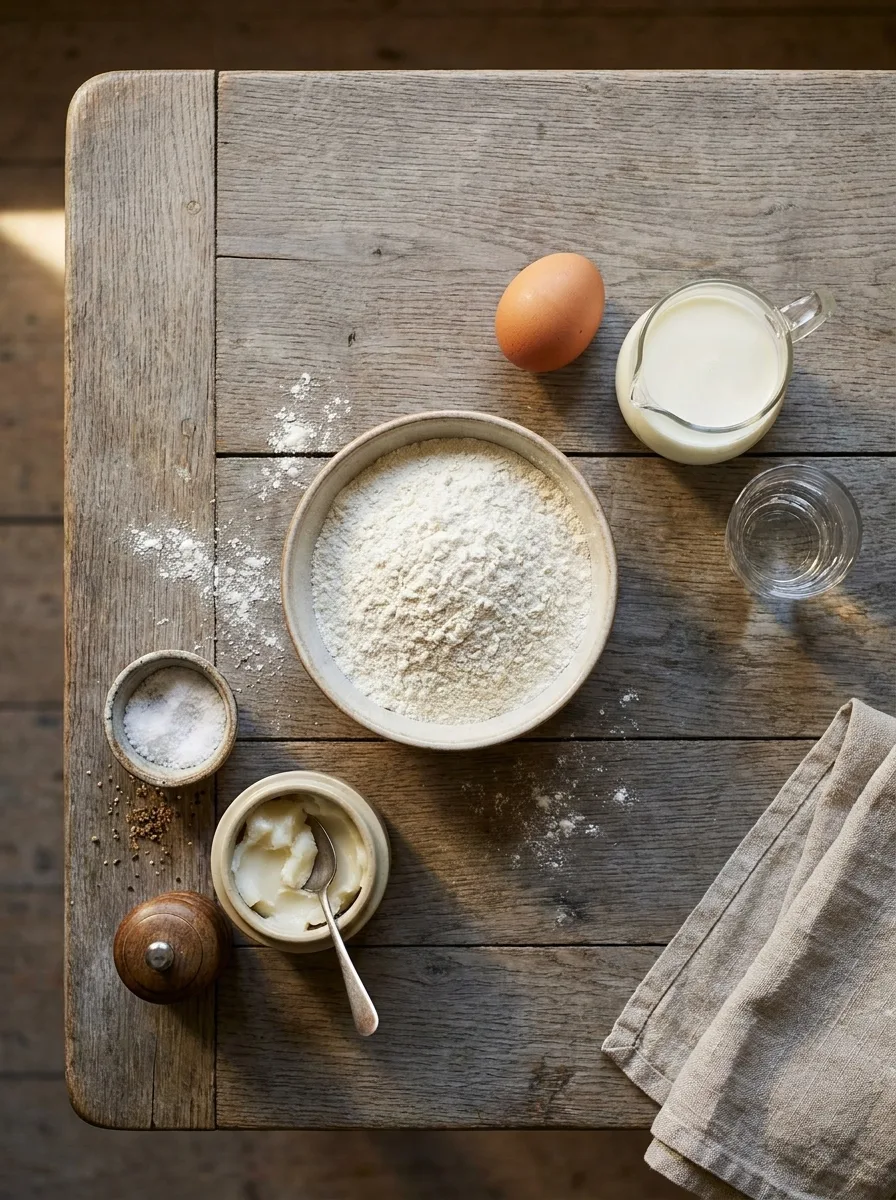
Yorkshire Puddings for 4 Ingredients
- 75g (3 oz) plain flour (all-purpose flour)
- 1 large egg
- 75ml semi-skimmed milk
- 55ml water
- 40g beef dripping, or 2 tbsp flavourless oil such as vegetable or sunflower
- Salt and freshly milled black pepper
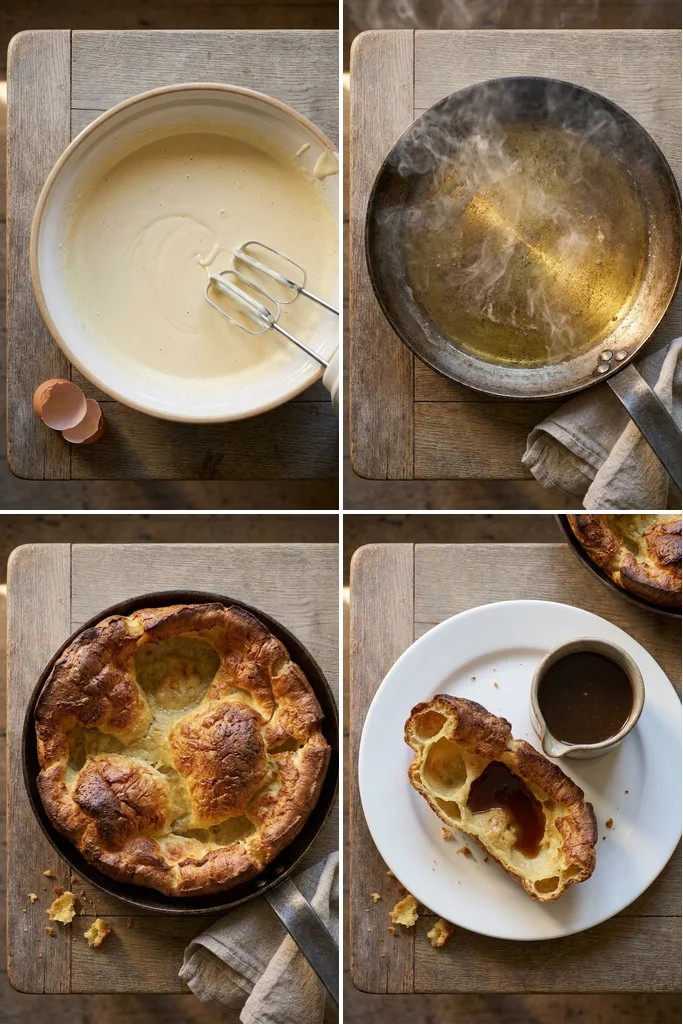
How To Make Delia Smith Yorkshire Puddings for 4
- Sift the flour high: Place a bowl on a cloth to keep it steady. Hold the sieve high above the bowl and sift in the plain flour. This aerates it before you even start mixing. Season with salt and pepper, then make a well in the centre.
- Mix the batter: Break the egg into the well. Beat with an electric hand whisk, gradually pulling the flour in from the edges. Slowly add the milk and water, whisking until smooth. Scrape the sides with a rubber spatula to catch any dry flour, then whisk once more.
- Heat the fat: About 15 minutes before you want to bake, set the oven to 220°C (200°C Fan / Gas Mark 7 / 425°F). Put the beef dripping or oil into a heavy frying pan or Yorkshire pudding tin with about 1 litre capacity. Heat in the oven for 10 minutes until the fat is smoking hot.
- Pour the batter: Take the tin out and place it on the hob over high heat. Pour the batter into the sizzling fat while the tin is still on the flame. This keeps the fat hot so it never drops in temperature.
- Bake: Return the tin to the highest shelf immediately. Bake for 25 to 30 minutes until risen, crisp, and golden. Do not open the oven door during baking.
- Serve immediately: Yorkshire puddings lose their crunch quickly. If they have to wait, pop them under a hot grill or back in the oven for a minute to crisp up.
What Are Common Mistakes With Yorkshire Pudding?
The biggest one is using self-raising flour. Lindsey from Delia Online explains that self-raising makes a spongy texture that does not hold its crispness.
Plain flour lets the steam do the rising instead of the raising agent, which gives you a hollow, crispy shell.
The second mistake is not getting the fat hot enough. If you pour batter into warm fat instead of smoking fat, it absorbs the oil and goes greasy.
The third is opening the oven door too early. The pudding needs constant heat for the full 25 minutes or it collapses.
Do I Need To Rest the Batter?
No. Delia says there is no need to let the batter stand, so make it whenever it is convenient. Many other recipes say rest for 30 minutes or even overnight, but Delia has tested this and it makes no difference to the rise or the texture.
I have made it both ways and she is right. The puddings rise exactly the same whether the batter sat for an hour or went straight in.
What Goes With These
The traditional partner is roast beef with horseradish sauce and onion gravy. But they work with any roast: chicken, pork, lamb. I also make them with sausages and gravy when I do not have time for a full roast.
If you are cooking for more people, the Yorkshire puddings for 6 use the same method in a larger oblong tin. Or scale this recipe up to the Yorkshire pudding for 12 for Christmas dinner.
FAQs
Can I make individual Yorkshire puddings with this recipe?
Delia makes this as one large pudding in a frying pan, not individual ones in a muffin tin. Lindsey says they do not really make individual Yorkshires, but if you want to, use a muffin tin heated with a teaspoon of oil in each hole. Reduce the baking time to 15 to 20 minutes.
Can I use vegetable oil instead of beef dripping?
Yes. Delia says you can use 2 tablespoons of flavourless oil such as vegetable or sunflower. Beef dripping gives a better flavour but oil works if you are cooking for someone who does not eat beef or if you cannot find dripping.
Why did my Yorkshire pudding not rise?
The most common reason is that the fat or the oven was not hot enough. Other causes include opening the oven door too early, using too much batter for the tin size, or using self-raising flour instead of plain. Lindsey says everyone makes at least one flat Yorkshire pudding at some point.
Can I halve this for 2 people?
Yes. Use 40g flour, half an egg (beat a whole egg and use half), 40ml milk, and 25ml water. Use a smaller tin with about half a litre capacity. The method and baking time stay the same.
More Recipes To Try:
Nutrition Facts
- Calories: 220 kcal
- Fat: 12g
- Carbohydrates: 20g
- Protein: 6g
- Dietary Fibre: 1g
Nutrition information is estimated per serving (serves 4).
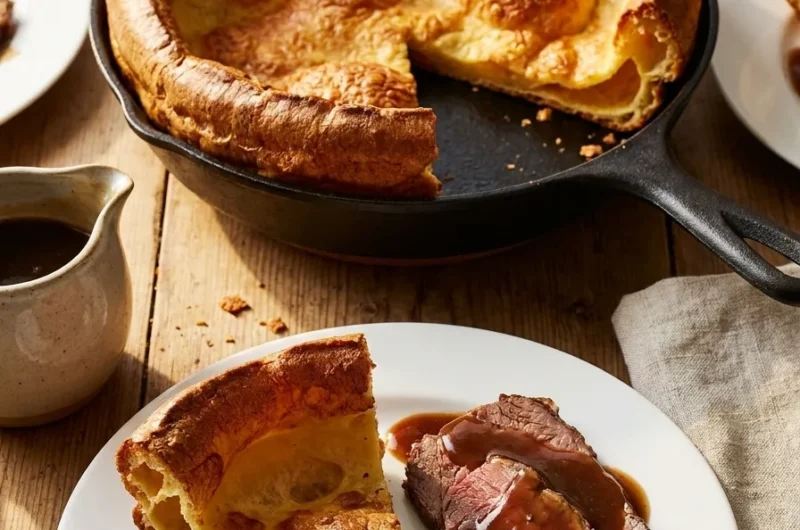
Delia Smith Yorkshire Puddings for 4
Course: Side DishCuisine: BritishDifficulty: Easy4
servings10
minutes30
minutes220
kcalDelia Smith’s Yorkshire puddings for 4 use one egg, 75g (3 oz) plain flour, a mix of semi-skimmed milk and water, and beef dripping in a frying pan at 220°C (Gas Mark 7) for 25 to 30 minutes.
I switched to plain flour and they rose properly for the first time.
Ingredients
75g (3 oz) plain flour (all-purpose flour)
1 large egg
75ml semi-skimmed milk
55ml water
40g beef dripping, or 2 tbsp flavourless oil such as vegetable or sunflower
Salt and freshly milled black pepper
Directions
- Sift the flour high: Place a bowl on a cloth to keep it steady. Hold the sieve high above the bowl and sift in the plain flour. This aerates it before you even start mixing. Season with salt and pepper, then make a well in the centre.
- Mix the batter: Break the egg into the well. Beat with an electric hand whisk, gradually pulling the flour in from the edges. Slowly add the milk and water, whisking until smooth. Scrape the sides with a rubber spatula to catch any dry flour, then whisk once more.
- Heat the fat: About 15 minutes before you want to bake, set the oven to 220°C (200°C Fan / Gas Mark 7 / 425°F). Put the beef dripping or oil into a heavy frying pan or Yorkshire pudding tin with about 1 litre capacity. Heat in the oven for 10 minutes until the fat is smoking hot.
- Pour the batter: Take the tin out and place it on the hob over high heat. Pour the batter into the sizzling fat while the tin is still on the flame. This keeps the fat hot so it never drops in temperature.
- Bake: Return the tin to the highest shelf immediately. Bake for 25 to 30 minutes until risen, crisp, and golden. Do not open the oven door during baking.
- Serve immediately: Yorkshire puddings lose their crunch quickly. If they have to wait, pop them under a hot grill or back in the oven for a minute to crisp up.
Notes
- Plain flour only. Self-raising makes it spongy.
- Milk and water, not all milk. The water creates steam for a better rise.
- Fat must be smoking hot before you pour the batter.
- Do not open the oven door for the full 25 minutes.


