 Anne Morgan
Unlike her slow Sunday roast, Delia Smith’s fast roast chicken goes into a 230°C oven with lemon and a garlic and tarragon butter inside, and roasts in 45 minutes. While it rests, the pan juices become a lemon and white wine sauce, and a small bird feeds 4.
She first printed it in How to Cook Book Two (1999), as the midweek, after-work one of her two ways to roast a chicken. The Delia Collection: Chicken (2003) reprints it unchanged in its spring chapter.
The other half of that pair is her slow-roast chicken with apple, sage and onion stuffing, for a bigger bird at the weekend. Tarragon also goes into her sherry vinegar and tarragon chicken, a jointed bird simmered in a pan rather than roasted whole.
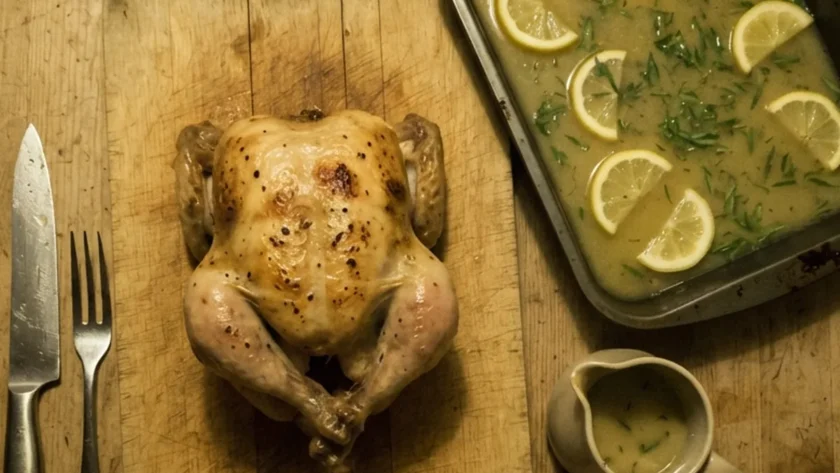
The bird comes out golden and moist, with a thin, sharp sauce that tastes of lemon and tarragon and soaks into the carved meat.
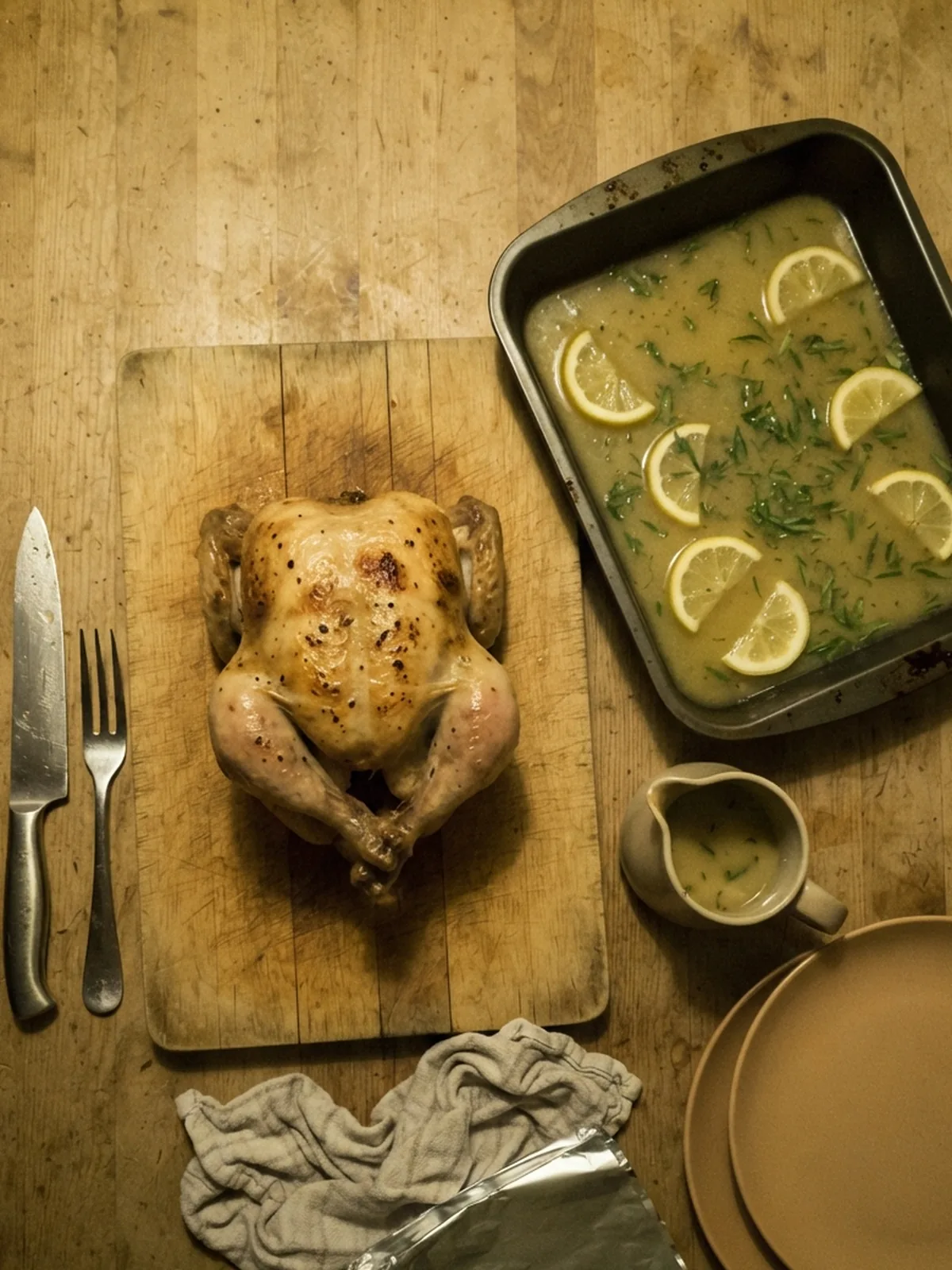
Delia Smith’s Fast-Roast Chicken with Lemon and Tarragon
Course: DinnerCuisine: BritishDifficulty: Easy4
servings10
minutes55
minutes545
kcalHer high-heat way with a small free range chicken: herb butter and lemon in the cavity, the oven door kept shut, and a sauce made in the tin.
Ingredients
- For the chicken:
1 free range chicken of 1.35kg (3lb)
½ small lemon, thinly sliced and the slices halved, plus the juice of the other half
2½ tablespoons chopped fresh tarragon leaves
2 cloves garlic, peeled and crushed
10g (½oz) softened butter
1 dessertspoon olive oil
275ml (10fl oz) dry white wine
salt and freshly milled black pepper
Directions
- Take the chill off: About an hour before cooking, or 30 minutes on a hot day, take the chicken out of the fridge and cut off the string holding the legs, so the joints are loose.
- Heat the oven: Heat the oven to 230°C (210°C fan), gas mark 8.
- Herb butter: Mash the garlic, 2 tablespoons of the tarragon and the butter together with a fork, seasoning with salt and pepper. Push it into the body cavity with the halved lemon slices.
- Oil and season: Smear a little of the oil over the base of a solid, flameproof roasting tin of about 23 x 28cm. Sit the chicken in it, rub the rest of the oil over the skin and season well.
- Roast: Put the tin in the lower third of the oven and roast for 45 minutes without opening the door.
- Drain and rest: Slide a wooden spoon into the cavity and, holding the breast end with a spatula, tip the bird so the buttery juices and lemon run into the tin. Move it to a carving board, cover with foil and rest it for 20 minutes.
- Sauce: Skim the excess fat from the tin with a tablespoon, then set the tin over direct heat. Add the wine and lemon juice and let it bubble until reduced by about half, then stir in the rest of the tarragon and season.
- Serve: Carve on to warm plates, pour any juices from the board into the sauce and spoon it over the chicken.
Notes
- That hour on the worktop is part of the method, but I wouldn't leave raw chicken out any longer, which is my own rule.
- With no wine to hand, a good chicken stock and a little extra lemon juice make the sauce instead, my own swap.
FAQs
Can I use other herbs?
Yes, and she encourages it. Her headnote suggests crushed, chopped rosemary, sage leaves or thyme instead of tarragon, or a mixture, and a couple of finely chopped shallots can replace the garlic.
She calls it a recipe for adapting to whatever you have handy, and her roasting guide says this method can be dressed up with different sauces and flavours.
How big a chicken works?
A small one. The recipe is written for a 1.35kg bird, and her guide keeps this high-heat method for smaller chickens, with slow roasting for anything bigger.
For a bird of 1.6 to 1.8kg I’d allow about 10 minutes more and check the juices from the thickest part of the leg run clear, which is my own adjustment.
Why take it out of the fridge first?
Her reason is that it takes the chill off the bird and helps it cook in the shorter time. Cutting the string so the legs hang loose does the same job for the joints.
On a hot day she cuts that hour back to about 30 minutes.
Will it be dry?
No. Her guide explains that a fast-roast bird spends far less time in the oven, so less moisture evaporates and the meat stays moist.
She adds that the texture is firmer than a slow roast but still tender, because a small chicken is a younger one.
Which chicken should I buy?
A free range one, as the card says. In her roasting guide she makes the point that the better the chicken, the moister and easier it is to cook, and she lists her recommended suppliers at the back of the book.


