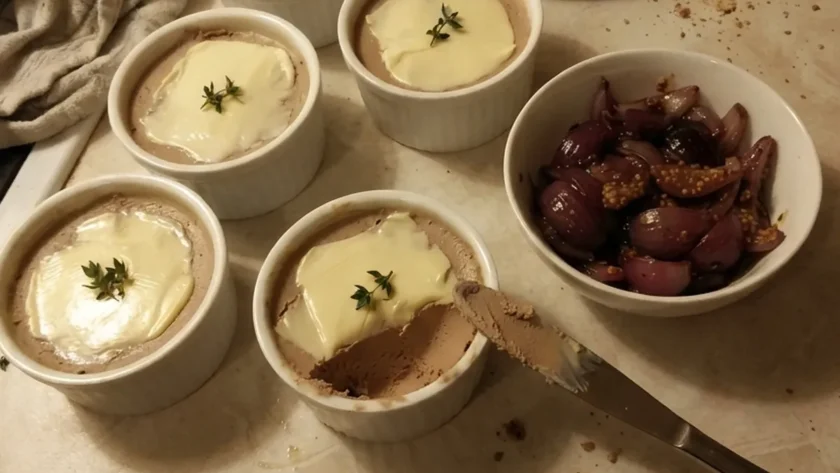
 Anne Morgan
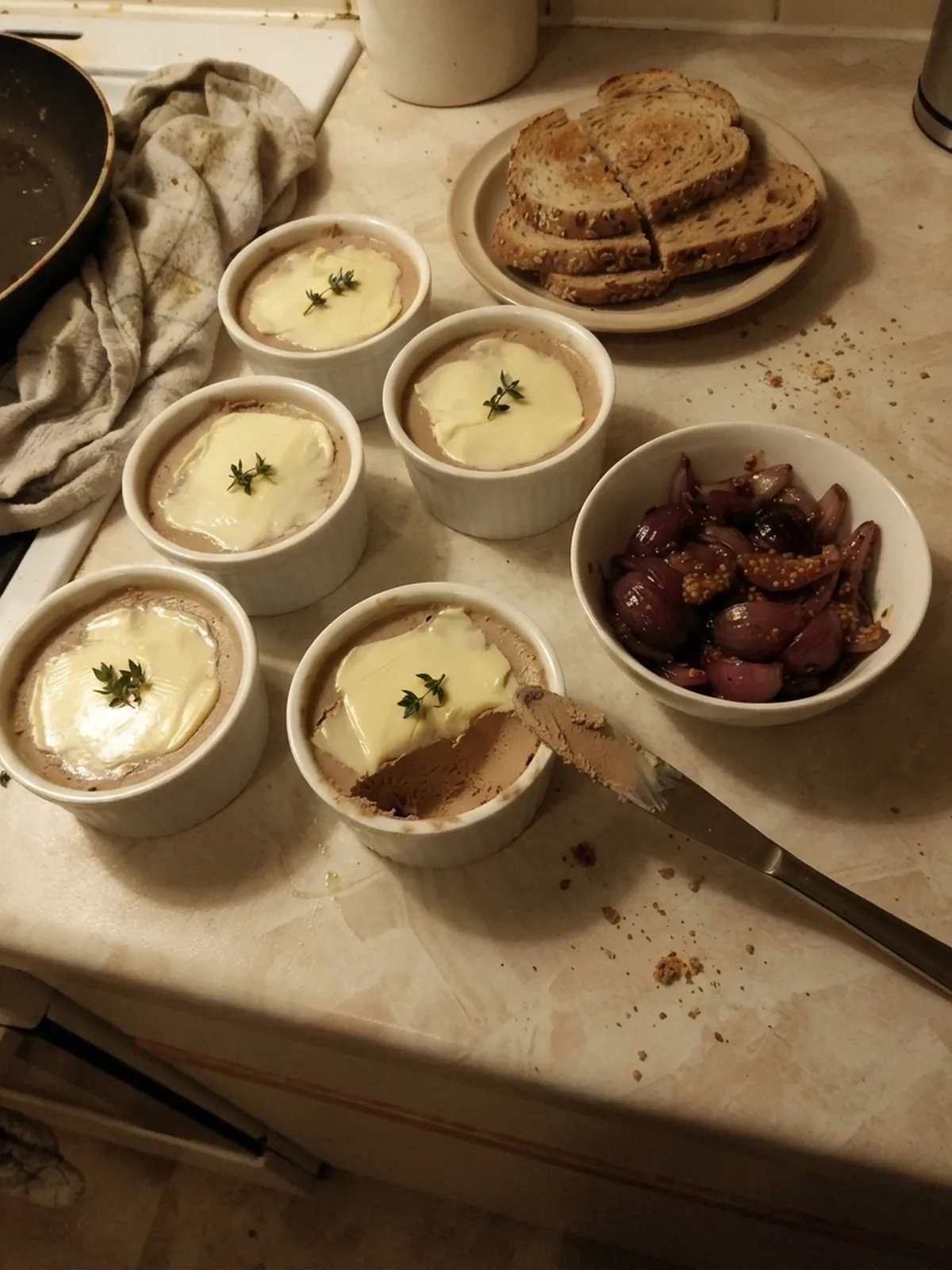
Made ahead in six little pots, Delia Smith’s chicken liver pâté is chicken livers fried in butter for about 5 minutes, then blended smooth with Cognac, mustard powder, mace, thyme and garlic. Each pot gets a thin seal of melted butter and a sprig of thyme, and a sweet-and-sour red onion salad goes alongside, a starter for 6.
Pâtés have their own place in How to Cook Book Three (2001), in a chapter of first courses meant to be ready before your guests arrive. She sees them as a starter before a main that isn’t too heavy, a lunch with cheese to follow, or something to put out when the house is full of people after snacks.
The onion salad isn’t there for decoration. She adds it to offset how rich the pâté is, and she likes the two of them with toasted multi-grain bread.
What you get is a smooth, buttery pâté under a firm yellow cap, with soft, glossy onion wedges that taste sharp and sweet at once.
Delia Smith’s Chicken Liver Pâté with Cognac
Course: StarterCuisine: FrenchDifficulty: Easy6
servings2
hours25
minutes20
minutes435
kcalButter-sealed pots of Cognac-laced liver pâté with sweet-sour onions alongside, a starter that waits in the fridge until you need it.
Ingredients
- For the pâté:
225g (8oz) chicken livers, rinsed and trimmed
2 tablespoons Cognac
225g (8oz) butter
2 teaspoons dry mustard powder
¼ teaspoon ground mace
1 teaspoon chopped thyme leaves, plus 6 small sprigs to garnish
2 cloves garlic, crushed
salt and freshly milled black pepper
- For the sweet-and-sour red onion salad:
3 medium red onions, peeled and cut into 8 wedges through the root
3 tablespoons olive oil
1 heaped teaspoon light soft brown sugar
3 tablespoons water
3 tablespoons red wine vinegar
¾ tablespoon wholegrain mustard
salt and freshly milled black pepper
Directions
- Livers: Melt about 25g (1oz) of the butter in a medium, heavy-based frying pan and fry the chicken livers over a medium heat for about 5 minutes, turning them often so they keep moving. Lift them out with a draining spoon into a blender or food processor.
- Butter and Cognac: Gently melt 150g (5oz) of the remaining butter in the same pan and add it to the blender. Pour the Cognac into the pan to pick up the juices left behind, then pour it over the livers.
- Blend: Add the mustard powder, mace, chopped thyme and garlic, season well with salt and pepper, and blend until completely smooth.
- Pots: Divide the pâté between six ramekins about 3cm (1¼in) deep with a 5.5cm (2¼in) base, or six similar pots. Melt the last 50g (2oz) of butter, pour a little over each one to seal it and press a thyme sprig into the top. Leave until quite cold, then cover with clingfilm and chill until needed.
- Onion salad: Heat the oil in a medium saucepan, add the onion wedges, turn the heat down to low and cook gently for 5 minutes, stirring now and then. Stir in the sugar and water, put a lid on and cook gently for another 10 minutes. Stir in the vinegar, mustard and some salt and pepper, then spoon into a serving bowl and leave to cool.
- Serve: Take the pâtés out of the fridge about an hour before you eat, as both the pâté and the onions are served at room temperature.
Notes
- To trim the livers, she rinses them under cold running water and dries them well on kitchen paper, then pulls off any skin and snips out tubes or bits of fat with kitchen scissors, as she explains for the ragù in the same book.
- Frozen chicken livers are fine, but her Complete Cookery Course, in its liver risotto, asks for them to be thawed completely before you start.
- My own safety advice is to cook the livers until no pink is left in the middle, as undercooked chicken liver can cause food poisoning. The NHS advises against eating liver or any pâté when pregnant.
- The 2 hours of chilling in the prep time are my own timing, so the butter seal can set.
FAQs
What changes if I use brandy instead of Cognac?
Very little, and her Complete Cookery Course uses brandy anyway. Both the 1983 and 1992 editions take 2 tablespoons of it with the same weight of livers and butter, and either fresh thyme or ¼ teaspoon of dried.
There’s no onion salad in that version. Instead she suggests hot toast, sprigs of watercress and a few gherkins. The 1983 edition adds silver-skinned onions, while the 1992 one offers pickled dill cucumbers in place of the gherkins.
How does she make it with duck livers?
Almost exactly the same way, as her notes to this recipe say duck livers work well too. Her Happy Christmas book (2009) has a Duck Liver Pâté with Armagnac for 6, with the same weights. Outside Christmas, when duck livers are hard to find, she says it works just as well with chicken livers.
That one swaps the Cognac for Armagnac, rests the mixture for 10 minutes before blending, and presses a juniper berry into each pot beside the thyme. Her serving ideas there are spiced pickled prunes in Armagnac or a marmalade of apples, raisins and shallots.
Is it the same as a chicken liver parfait?
No, I can’t find a parfait in any of her books. Hers is a straightforward blended pâté, though the brandy version lets you press the cooked livers through a nylon sieve instead of using a blender.
For an extra-fine, parfait-like texture, I’d blend it as the card says and then push it through a fine sieve before potting, a step of my own.
How long will it keep in the fridge?
For 3 to 4 days at most, my own limit, with the butter seal left in place until you’re ready to eat. Both editions of the Complete Cookery Course leave it covered in the bottom of the fridge for a day or two before it’s eaten, so there’s no rush.
Both also let you use one earthenware pot instead of six small ones, and the 1992 edition gives its size, 425ml (15fl oz).
Which of her other recipes use chicken livers?
A few. Her Complete Cookery Course has a risotto with chicken livers and mushrooms for 2 or 3, and the ragù for her lasagne al forno, later in the same book as this pâté, uses 175g of them, chopped very small and browned before they join the meat.